The Global View

The Global View
Sometimes it is necessary to view the world from a new perspective.

Saturday, March 20, 2010

WWII, The Olympics, and a Modern Interpretation


The Olympics have always been events that bring the world together. Or so we thought! It turns out that the Olympics were not always something that brought people together; it brought them apart. This was the case in 1940 when the unthinkable happened. The Olympics were cancelled! This event changed the Olympic Movement so drastically that no Olympic games have been cancelled ever since that 7-year period during WWII. There are huge differences between the olympics before WWII and those that have come after. WWII was a crossroads for the culture and society that is common today. WWII had a tremendous impact on everything and everyone in the world.

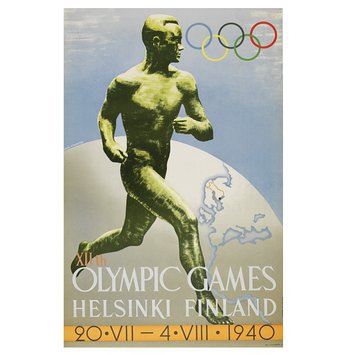
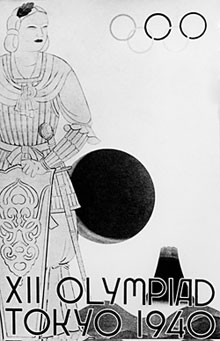
Beginning in 1938, a scandal began to unfold in the Olympic Movement. Japan had originally been selected to host the 1940 Olypics. Since Japan was emerging as an Axis Power, many nations began to threaten to boycott the Olympics if they were going to be held in Japan. Even the League of nations began to get involved. In late 1938, Japan finally decided to abandon it's attempt to host the Olympic games. Instead, the Oylmpics were awarded to Helsinki, Finland. Shortly after planning the complete olympics that would take place in Finland, WWII broke out in its full. The games were then completely cancelled and did not resume until 1948 when London hosted the next Olympic Games. At this point in time the winter and summer olympics were heald every year. That is a lot of sporting events that had to be cancelled just because of a war.

The modern Olympics that the world knows and loves have not been cancelled despite the ongoing outbreaks of wars around the world. Today, the Olympics are seen as a way to forget the troubles of the world and come together as common spectators to appreciate the art of sport. Olympics are now such a conerstone of world cuture that despite a recession, terrorism, many wars, and other global problems we still manage to put them on. This represents the difference between the Olympic Movement in the time of WWII and the Olympic Movement that we see today. This difference also helps to outline the greatness of modern times. The world could be at war and the countries that send the troops would still grind on without much of a glance. It is just the way that the modern society grows and functions. Wars that happen today are still important, but they do not pose the immidiate threat like they used to.

During WWII new tensions that had never been a problem on the world front before had broken out. This was the leading cause that the 1940 Olympics were cancelled. WWII was so encompassing and so deadly that event the simple act of participating in sports for one's country turned into an insult to the rest of the world. The pre-WWII Olympics can be described as more simple and less complex than they are now. The Olympics were put on and just included the traditional events. Today, the olympics carry substantially more events than they used to. It is unfortunate that the world was so entrenched in the acts of total war that the art of sport was forgotten for seven long years. The world was not developed enough to fight a war and still prosper domestically like we are used to today.

There can be many reasons why the Olympic Movement of today does not compare to the Olympic Movement of WWII. The biggest reason is fear. Today the world is terrified of having another all-encompassing war. There are weapons that the world has now that people in WWII could never have dreamed of. A war such as this would be devastating on so many levels. The world uses the Olympics as we know them today as an outlet to say that, no matter what, there are always two and a half weeks of every two years that we can put aside to enjoy friendly competition. As long as the people of the world continue to love sport, the Olympics will always be there to remind us that we all share at least some common ground.

665 Words

Sunday, February 28, 2010

The Fall/Fail of Democracy in Germany and Russia


In Germany and Russia democracy failed to work for long in the post WWI era. In Germany, democracy was struck down by the people and in Russia, democracy was destroyed by the government.

In February 1919, Germany set up the Weimar Republic in response to the Treaty of Versailles. The Weimar Republic was a good democracy modeled on the democracies of Western Europe. The democracy included a Bill of Rights and men and women who were over the age of 21 could vote in the elections. All persons in the Weimar Republic government were elected by popular vote. Many of the German people were not fond of the new democracy and did not like the new government. Left and right-wing citizens assassinated political leaders to show their unhappiness. To add to the already stressed republic, no majority was ever reached in government because it was made up of many smaller parties. Also, the Great Depression began to add economic stress to the country. Just when it seemed it couldn't get any worse, France invaded the lucrative coal mines of Germany. The economy then completely collapsed. The small terrorist group called the Nazis eventually became a political party and gradually took over the government election by election. When the Nazis finally had majority control, they put Hitler into power and named him Supreme Chancellor.

The consequences of the Treaty of Versailles put the people of Germany into a bad position and the revenge of other countries on Germany sealed its fate. The people of Germany were ultimately the ones who made Germany a totalitarian state. Over many years, the people of Germany elected the Nazi party to a greater and greater roll in government. They did not feel any regrets for putting Hitler into power. Some people might argue that the people did not make Germany totalitarian because they did not elect Hitler as their leader. However, they did elect the Nazi party as their leader and were obviously comfortable with their position. Many German people even liked Hitler and were proud to have him as leader. The government takeover by the Nazis under the eye of Hitler set the stage for the second world war and worries for Europe in the years to come.

In Russia the totalitarian revolution was somewhat different than it was in Germany. Before 1919, Nicholas II and and the Russian monarchy were destroyed. Lenin arrived from Germany with many ideas of communism to help improve his country. When Lenin had secured his place on top of the government, he allowed an election to determine the members of the Constituent Assembly. He felt that the election would only add security to his government. However, his party only recieved one quarter of the votes behind the less-progressive Menshevik party. In a sense, Lenin "looses his power." Naturally, being a totalitiarian, Lenin did not like this at all. After one and a half days in session, Lenin dissolved the Constituent Assembly with the use of his Red Army. This led to a hardening of opposition from his people. Between 1918 and 1920 a civil war breaks out in Russia between the communists and the others (There were many people who were against the communists). The communists end up winning the war.

In Russia it is very clear that the people did not have a choice in the progression of democracy. When the people were allowed to vote in an election they decided that it was best to have less radical people in government. Lenin completely discredited their decision and took over the power of government himself. Some people might say that the people did choose to have a communist society because one quarter of the people that voted, voted for someone who was a communist. While this is true, it is important to remember the three quarters of the people did not vote for the communists. That is a huge number of people that were not okay with the totalitarian takeover of Russia.

In conclusion, the people of Germany were comfortable with the totalitarian takeover of their country while the people of Russia were not okay with it. This sets the stage for events that will happen in the future. For example, the very nationalistic feelings in Germany lead to the start of WWII and the smaller support for government in Russia led to the murder of over 30 million people so that the government would be supported. In Germany smaller amounts of people were killed because there were more people on board with the government in the first place. Throughout history the rise and fall of communist regimes can be traced to the actions of people or the actions of government.

735 Words

For more information please visit these websites...

http://www.worldaffairsboard.com/attachments/world-wars/16595d1255447772-hilarious-post-wwi-map-after-math-first-world-war.jpg

http://www.zum.de/whkmla/histatlas/germany/weimar.gif

http://www.johndclare.net/Basics_Germany.htm

http://www.thecorner.org/hist/total/s-russia.htm